
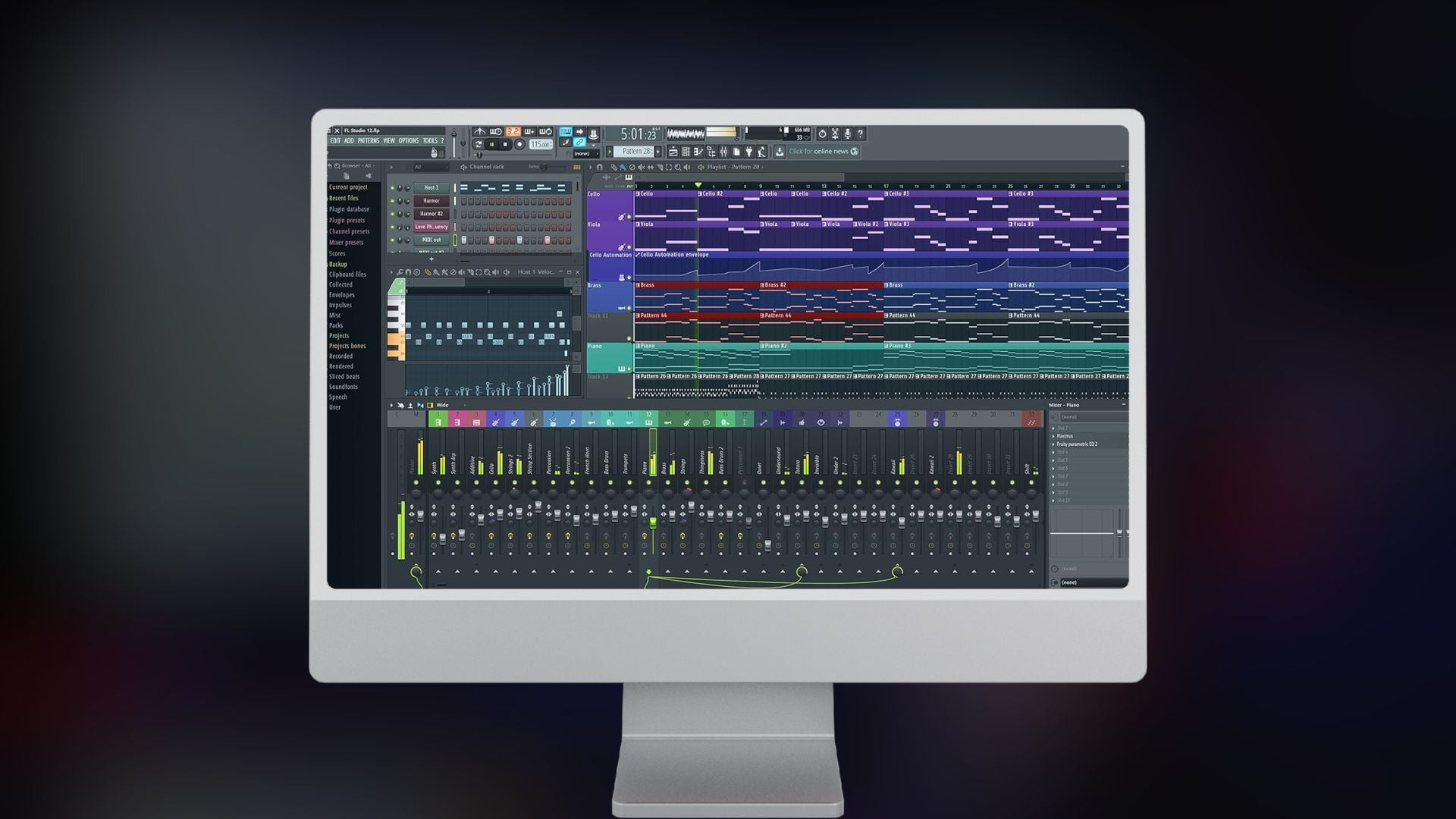
Image credits: FL Studio
Best Plugins for FL Studio Users

FL Studio remains a hugely popular digital audio workstation (DAW) among music producers thanks to its user-friendly interface and comprehensive toolset. However, taking full advantage of FL Studio requires quality VST plugins to expand its internal sounds and effects. The right virtual instruments and effects plugins can take almost any FL Studio project to the next level sonically. Be it in-house plugins like Harmor, Gross Beat or third-party synth VSTs like Serum and Omnisphere for lush pads and searing leads, to sampled acoustic instruments like Keyscape and Kontakt for realistic drums, guitars, and more, plugins breathe new creative life into FL Studio. Experienced FL power users rely on a suite of essential FX and mixing plugins as well, whether analogue-modeled compressors from Waves to lush reverbs from Eventide. Savvy FL Studio producers know which VSTs will perfectly complement the DAW’s strengths while also addressing any limitations. Here are the best virtual instruments and effects plugins aimed specifically at FL Studio users in 2024.
List of the best plugins for FL Studio users:
- Waves SSL G Bus Compressor
- iZotope Ozone 11 Advanced
- Gross Beat
- Antares AutoTune Pro
- Fabfilter Suite
- Voxengo SPAN
- Soundtoys Little AlterBoy
- Vital
- Waves L1 Ultramaximizer
- Soundgoodizer
Waves SSL G Bus Compressor
Category: Compressor
Key Features:
- Emulates the iconic solid-state bus compression sound of the SSL G-Series console
- Includes presets from Grammy-winning mix engineers
- Special feedback compression design allows natural-sounding level control
- Mix knob enables versatile parallel compression effects
Price: $39.99
DIG DEEPERiZotope Ozone 11 Advanced
Category: Mastering Plugin
Key Features:
- Includes Clarity module that adaptively maximizes spectral power for professional, polished, and louder mixes
- Harnesses AI to rescue problematic mixes with precision stem processing
- Separately enhances transients and sustain to unlock creative potential
- Achieves clear, balanced vocals using AI analysis of top songs
- Features upward compression for increased density and detail with one intuitive slider
Price: $309.00
DIG DEEPERGross Beat
Category: Creative Gating Plugin [FL Studio Stock Plugin]
Key Features:
- Real-time audio gating, glitching, repeating, and stuttering effects
- 36 user-definable envelopes for unlimited creative control
- Presets can be linked to keyboards, pads, or automation for on-the-fly changes
- Perfect for sidechain and pumping effects without an external signal
- Powerful MIDI control and 2-bar rolling audio buffer
Price: $99 [included with all FL Studio paid versions]
DIG DEEPERAntares AutoTune Pro X
Category: Auto-Tune Plugin
Key Features:
- Sophisticated pitch correction with innovative Throat Modeling and Formant Correction
- Low-latency mode for real-time pitch correction in the studio or live
- Redesigned Graph Mode for detailed pitch and time editing
- Auto Mode for easy, real-time pitch correction and effects
- Includes artist presets and a Presets Manager to fast-track creativity
Price: $459
DIG DEEPERFabFilter Essentials Bundle
Category: Mixing plugins [Pro-C2 , Pro-Q3, & Pro-R2]
Key Features:
Pro-C 2:
- 8 different compression styles including vocal, bus, punch, pumping, and more
- Side-chain EQ section with customizable HP, LP, and additional filters
- Multiple interface sizes: small, medium, and large.
Pro-Q 3:
- Up to 24 EQ bands with sloping to 96dB/octave
- Surround support up to Dolby Atmos 7.1.2
- Spectrum Grab to adjust peaks directly
Pro-R 2:
- 3 core algorithms: rooms, plates, and retro digital reverbs
- Full Dolby Atmos 9.1.6 immersive audio support
- Ducking controls for separating dry and wet signals
Price: $359
DIG DEEPERVoxengo SPAN
Category: Spectrum Analyser Plugin
Key Features:
- Real-time FFT-based frequency spectrum analysis
- Customizable spectrum view with slope, overlap, and block size controls
- Loudness metering (EBU R128, K-System) with true peak clipping detection
- Multi-channel and dual-spectrum analysis
- User-adjustable metering ballistics and spectrum color
Price: FREE
DIG DEEPERSoundtoys Little AlterBoy
Category: Vocal Processing Plugin
- Pitch shift vocals in real-time with formant control
- Create vocal harmonies using the mix control
- Lock vocals to a single pitch for robotic effects
- Use MIDI to control pitch for vocoder-like effects
- Includes tube saturation modeling from Decapitator
Price: $99
DIG DEEPERVital
Category: Synth Plugin
Key Features
- Spectral warping of wavetables to transform harmonics
- Create custom wavetables from samples, synth editing, or text
- Animated, visual interface to see wavetables, filters, etc.
- Drag and drop modulation with live preview
- Powerful sound design tools like custom LFOs, noise sources, and MPE
Price: Freemium
DIG DEEPERWaves L1 Ultramaximizer
Category: Limiter Plugin
Key Features
- True peak limiting to prevent inter-sample clipping
- Look-ahead peak limiter for precision and maximum loudness
- Overshoot-free response for transparency
- IDR dithering for increased digital resolution
- Auto-release for optimal response to dynamics changes
Price: $29.99
DIG DEEPERSoundgoodizer
Category: Maximizer Plugin [Stock plugin]
Key Features
- Maximus sound processing engine
- Single knob controls amount of “goodifying”
- 4 hand-crafted Maximus presets
- Phase-locked, hyper-calibrated, and bit-polished
- Controls mix between input and multiband compression
Price: Free with FL Studio
DIG DEEPER
Latest magazine
March 28, 2024

Magazine
- Arodes cover Interview
- Armin van Buuren: Breathing In [Exclusive Interview]
- Ibiza 2024: What To Expect
- Burak Yeter: A Day In Space [Exclusive]